
Abstract
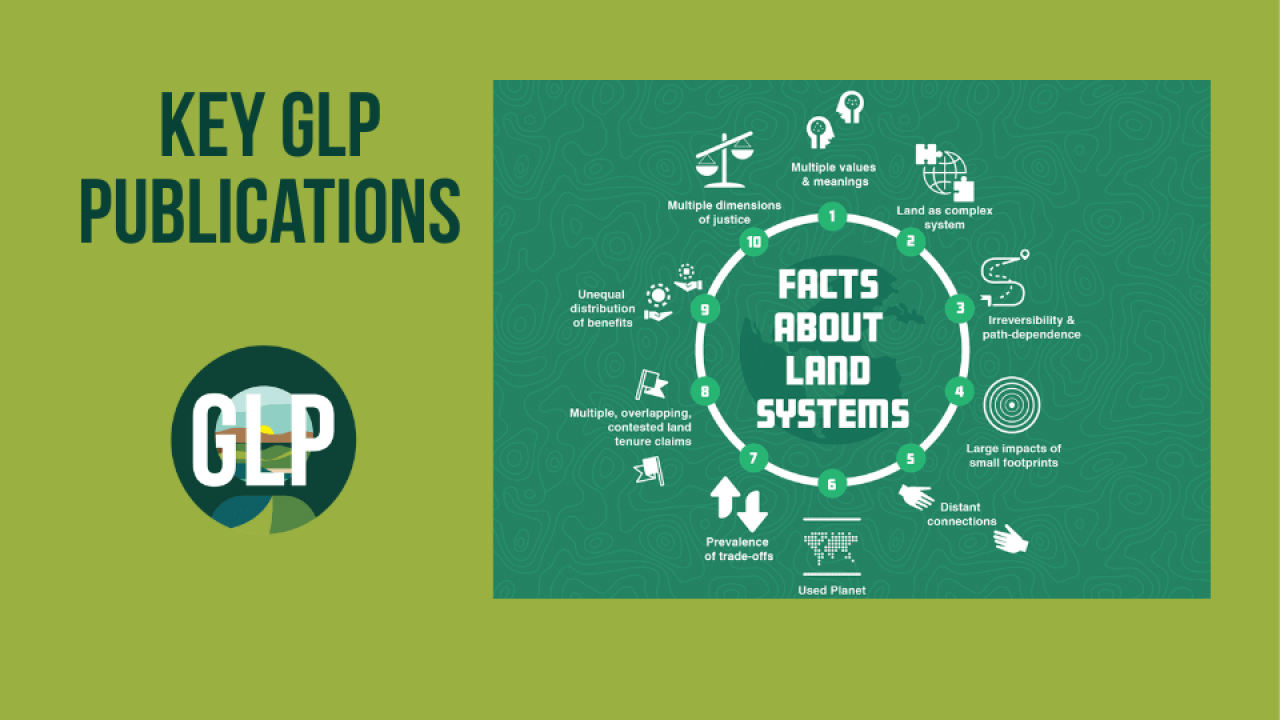
Land use is central to addressing sustainability issues, including biodiversity conservation, climate change,food security, poverty alleviation, and sustainable energy. In this paper, we synthesize knowledge accumu-lated in land system science, the integrated study of terrestrial social-ecological systems, into 10 hardtruths that have strong, general, empirical support. These facts help to explain the challenges of achievingsustainability in land use and thus also point toward solutions. The 10 facts are as follows: 1) Meanings andvalues of land are socially constructed and contested; 2) land systems exhibit complex behaviors withabrupt, hard-to-predict changes; 3) irreversible changes and path dependence are common features ofland systems; 4) some land uses have a small footprint but very large impacts; 5) drivers and impacts ofland-use change are globally interconnected and spill over to distant locations; 6) humanity lives on a usedplanet where all land provides benefits to societies; 7) land-use change usually entails trade-offs betweendifferent benefits—"win–wins" are thus rare; 8) land tenure and land-use claims are often unclear, overlap-ping, and contested; 9) the benefits and burdens from land are unequally distributed; and 10) land usershave multiple, sometimes conflicting, ideas of what social and environmental justice entails. The facts haveimplications for governance, but do not provide fixed answers. Instead they constitute a set of core princi-ples which can guide scientists, policy makers, and practitioners toward meeting sustainability challengesin land use.l