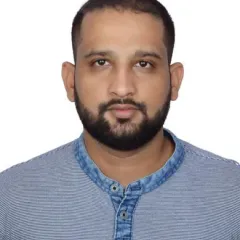
SANDEEP GAWDIYA
About SANDEEP's Work
Dr. Sandeep Gawdiya is an accomplished agronomist and academic leader currently serving as an Assistant Professor of Agronomy at the School of Agriculture, Galgotias University, Greater Noida, India. With a deeply rooted passion for advancing sustainable agricultural practices, Dr. Gawdiya combines rigorous research expertise in soil fertility, crop management, and precision farming with a strong commitment to teaching, mentoring, and interdisciplinary collaboration.
Early Life and Education
Dr. Gawdiya pursued his undergraduate studies (B.S. Agriculture, 2013–2017) at Agriculture University, Jodhpur, Rajasthan. Motivated by a desire to tackle the pressing challenge of optimizing nitrogen use in staple crops, he went on to earn a Master of Science in Agronomy (2017–2019) from Sardar Vallabhbhai Patel University of Agriculture and Technology, Meerut, Uttar Pradesh. His master’s research, funded by the Indian Council of Agricultural Research (ICAR), focused on precision nitrogen management in wheat under conservation agriculture—a study that identified best practices for improving wheat yield and soil health in northwestern India.
Building on this foundation, Dr. Gawdiya completed his Ph.D. in Agronomy (2019–2023) at the ICAR–Indian Agricultural Research Institute (IARI), New Delhi. Under the prestigious UK Research and Innovation Global Challenge Research Fund (South Asian Nitrogen Hub), his doctoral research centered on “Enhancing Nitrogen Use Efficiency in Rice and Wheat by Identification of Nitrogen-Efficient Genotypes.” His work led to the discovery of rice and wheat genotypes with superior nitrogen-use profiles, offering pathways toward reducing fertilizer inputs without compromising yield.
Academic and Research Career
In July 2023, Dr. Gawdiya joined Galgotias University as an Assistant Professor of Agronomy. He concurrently holds a Research Scientist role at the Galgotias Centre for Interdisciplinary Research, where his responsibilities include leading high-impact field and laboratory investigations (80% research, 20% teaching) and fostering collaborations with national and international partners—such as ICAR-IARI (New Delhi), Rutgers University (USA), Nanyang Technological University (Singapore), and Prince Sultan Institute for Environmental Research (Saudi Arabia).
His research interests span a broad array of topics:
Genotype × Environment × Management interactions for climate-smart agriculture
Soil fertility and nutrient management, including innovative technologies like precision nitrogen management, biological nitrification inhibition, and nano-fertilizers
Meta-analysis to synthesize findings from diverse agronomic studies
Integration of trustworthy AI and big data approaches into crop and ecosystem modeling
Dr. Gawdiya’s work has contributed extensively to the scientific literature. He has published and had accepted over thirty peer-reviewed research papers and book chapters. Notable recent publications include:
Field-based evaluation of wheat cultivars under graded nitrogen levels in North-West India (Frontiers in Agronomy, 2025)
Biological nitrification inhibition–enabled climate-smart nitrogen-efficient genotypes (Indian Journal of Fertilisers, 2025)
Crop diversification as a cornerstone for sustainable agroecosystems (Discover Applied Sciences, 2025)
Conservation agriculture–based intensification studies in the Indo-Gangetic Plains (Field Crops Research, 2024)
Machine learning–driven field-scale yield prediction in wheat and rice (Smart Agricultural Technology, 2024; Computers and Electronics in Agriculture, communicated)
He has also contributed chapters to Springer Nature volumes on topics such as policy innovation for sustainable food systems, hydroponics, and biodiversity conservation, reflecting his commitment to bridging scientific research with real-world policy and practice.
Teaching and Mentorship
As a dedicated educator, Dr. Gawdiya teaches a wide range of graduate-level courses, including “Current Trends in Agronomy,” “Stress Crop Production,” “Dryland Farming,” “Principles and Practices of Organic Farming,” and “Geo-informatics and Nano-technology.” His teaching evaluation scores consistently average above 4.7 out of 5, reflecting his engaging, student-centered approach. In Spring 2024, he designed and delivered a new value-added course—“Data Analysis for Digital Agriculture”—equipping students with skills in Python, R, and QGIS for precision agronomy.
Dr. Gawdiya actively supervises seven M.S. students and serves on advisory committees for eight additional graduate students. He takes pride in mentoring early-career researchers across disciplines, guiding them in integrating agronomic expertise with data-driven modeling. Under his mentorship, students have achieved top ranks in national competitions; notably, his team secured 31st place at the 2023 Smart India Hackathon for developing machine learning models to detect nutrient deficiencies in field crops.
Extension and Outreach
Beyond academia, Dr. Gawdiya spearheads on-farm evaluation programs and extension events. He organized the 2024 “Best Management Practices Field Day” in Dankaur, Uttar Pradesh, and led initiatives assessing soil properties under different cropping systems. He has delivered radio talks for All India Radio on topics such as point placement of water and vermicomposting, aiming to disseminate science-based recommendations to farmers and rural communities.
Professional Service and Leadership
Dr. Gawdiya serves as Associate Editor for Agrosystems, Geosciences & Environment (Wiley/ASA/CSA/SSSA) and contributes reviews to journals such as Scientific Reports, BMC Plant Biology, Smart Agricultural Technology, and the International Journal of Agricultural Sustainability. He has co-chaired technical sessions at major conferences, including the 2025 International Conference on Agritech and the 2023 “Technology Driven Agriculture to Face Future Challenges” symposium. Within Galgotias University, he is the Program Chair for M.S. & Ph.D. programs in Agriculture and coordinates mentor–mentee activities.
Awards and Honors
Dr. Gawdiya’s scholarly excellence has been recognized through numerous fellowships and awards:
Senior Research Fellowship, ICAR-IARI (2019–2023)
M.S. Best Thesis Award, Agro–environmental Education and Farmers Society (2022)
Innovative Article Awards and Best Article Awards for publications on vermicomposting and climate-resilient rice production (2022)
National Eligibility Test, Certified Agronomist/Teacher, ICAR–ASRB (2019)
Junior Research Fellowship, ICAR (2017–2019)
He is an active member of professional societies such as the British Ecological Society, Fertiliser Association of India, and Indian Society of Agronomy.
Future Directions
With a clear vision of integrating cutting-edge technologies into sustainable farming systems, Dr. Gawdiya’s future goals include:
Expanding the use of spectral sensors and digital analytics to refine nutrient management recommendations in real time
Harnessing artificial intelligence and big data to develop predictive decision-support tools that enhance resource use efficiency and resilience under climate variability
Strengthening interdisciplinary partnerships to translate research findings into scalable interventions for , Smallholder farmers across South Asia