
Peng Li
About Peng's Work
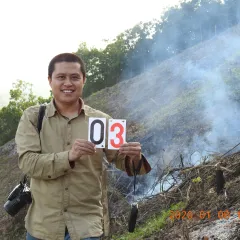
Peng Li is a professor of Natural Resources at the Key Lab for Resources Use & Environmental Remediation, Institute of Geographic Sciences and Natural Resources Research (IGSNRR), Chinese Academy of Sciences (CAS). His research interests are in Natural Resources Remote-sensing and Border Land-use Science, especially in continuous change detection using from Landsat/Sentinel imagery. He focuses recent research on the dynamics and mechanisms of tropical forest-swidden-plantation (TFSP), active five occurrence and dynamics, Landsat/Sentinel cloud coverage and imagery acquisition probability, and border land use change and geo-economic cooperation. Since 2013, he has led nearly twenty times of field trips on the dynamics in forests, swidden agriculture, commercial tree/crop plantations, impervious surface, and livelihoods in South (e.g., Nepal) and Southeast Asian (primarily the mainland part) countries and, the Southwestern borderlands of China, including Yunnan Province, the Guangxi Zhuang Autonomous Region, and the Xizang Autonomous Region. He has led three projects funded by the National Natural Science Foundation of China, published over 120 peer-reviewed papers, authored the monograph Green Silk Road: Assessment of Human Settlement Suitability, and co-authored a scholarly work on shifting cultivation. He is one of members of the Working Group “Shifting Cultivation in Transition” of Global Land Programme (GLP).