
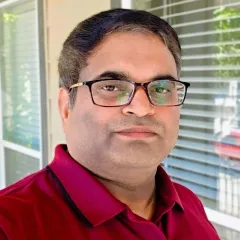
Deepak Kumar
About Deepak's Work
I am a Professor at Nalanda University, India, and a Remote Sensing and GeoAI scientist dedicated to advancing climate resilience through data-driven environmental research and innovation. Recognized among the World’s Top 2% Scientists for 2025 by Stanford University and Elsevier, my work focuses on developing high-resolution forecasting and decision-support systems for extreme events such as wildfires, floods, droughts, and severe weather. By integrating Remote Sensing, Geospatial Artificial Intelligence (GeoAI), Numerical Weather Prediction (NWP), and Earth system science, I transform complex environmental data into actionable insights that support sustainable development, disaster risk reduction, and climate adaptation worldwide.
My research lies at the intersection of climate science, geospatial technologies, artificial intelligence, sustainability, and environmental systems. I specialize in Remote Sensing, GeoAI, Data Science, Satellite Image Processing, Climate Analytics, and Emerging Technologies, with a strong emphasis on operational forecasting, climate resilience, urban-environment interactions, and socio-environmental sustainability.
At Nalanda University, I lead interdisciplinary research and academic initiatives focused on climate risk assessment, environmental monitoring, geospatial intelligence, and sustainable development. My work bridges natural sciences, engineering, social sciences, and policy to address pressing global challenges related to climate change, urbanization, energy transitions, and ecosystem resilience. I continue to advance innovative applications of GeoAI and Earth observation technologies for environmental forecasting and decision-making. Prior to joining Nalanda University, I served as a Research Scientist at Texas Tech University, where I specialized in high-resolution numerical weather prediction, ensemble forecasting, wildfire modeling, drought–fire interactions, flood forecasting, and real-time operational weather systems. My research integrated Remote Sensing, GeoAI, Data Science, and multi-sensor data assimilation to improve forecasting of extreme weather and environmental hazards.
Earlier, I worked at the State University of New York at Albany, contributing to weather and climate analytics with a particular focus on the Urban–Climate–Energy nexus. My research combined climate science with social sciences, humanities, and emerging technologies to develop data-driven solutions for utilities, emergency management agencies, weather services, homeland security organizations, and local communities.
Before moving to the United States, I served as an Assistant Professor at Amity University, Delhi-NCR, India, where I developed expertise across the full research lifecycle from conceptualization and experimental design to geospatial modeling, analytics, and visualization. My work centered on remote sensing applications, urban climate systems, energy–environment interactions, and climate-change impacts on complex socio-environmental systems. I have led government-funded research projects as Principal Investigator and developed a strong intellectual property portfolio comprising eight patents and one registered copyright. I have successfully mentored doctoral, postgraduate, and graduate students and remain committed to fostering the next generation of researchers and practitioners in geospatial and climate sciences.
My scholarly contributions include nearly 100 peer-reviewed publications in leading Web of Science and Scopus-indexed journals, along with six authored or edited books published by internationally recognized publishers, including Elsevier, Springer, CRC Press, Taylor & Francis, and Wiley. I have presented my research at numerous international conferences, workshops, and scientific forums worldwide.
As part of my academic service, I have reviewed more than 230 manuscripts, research proposals, and grant applications, and have served as an invited reviewer, editorial board member, and associate editor for several high-impact journals. My research aligns strongly with the United Nations Sustainable Development Goals (SDGs), particularly SDG 7 (Affordable and Clean Energy), SDG 10 (Reduced Inequalities), SDG 11 (Sustainable Cities and Communities), and SDG 13 (Climate Action).
I remain committed to advancing transdisciplinary research, fostering international collaborations, and developing innovative science-based solutions that contribute to climate resilience, sustainable development, environmental stewardship, and societal well-being at local, regional, and global scales.